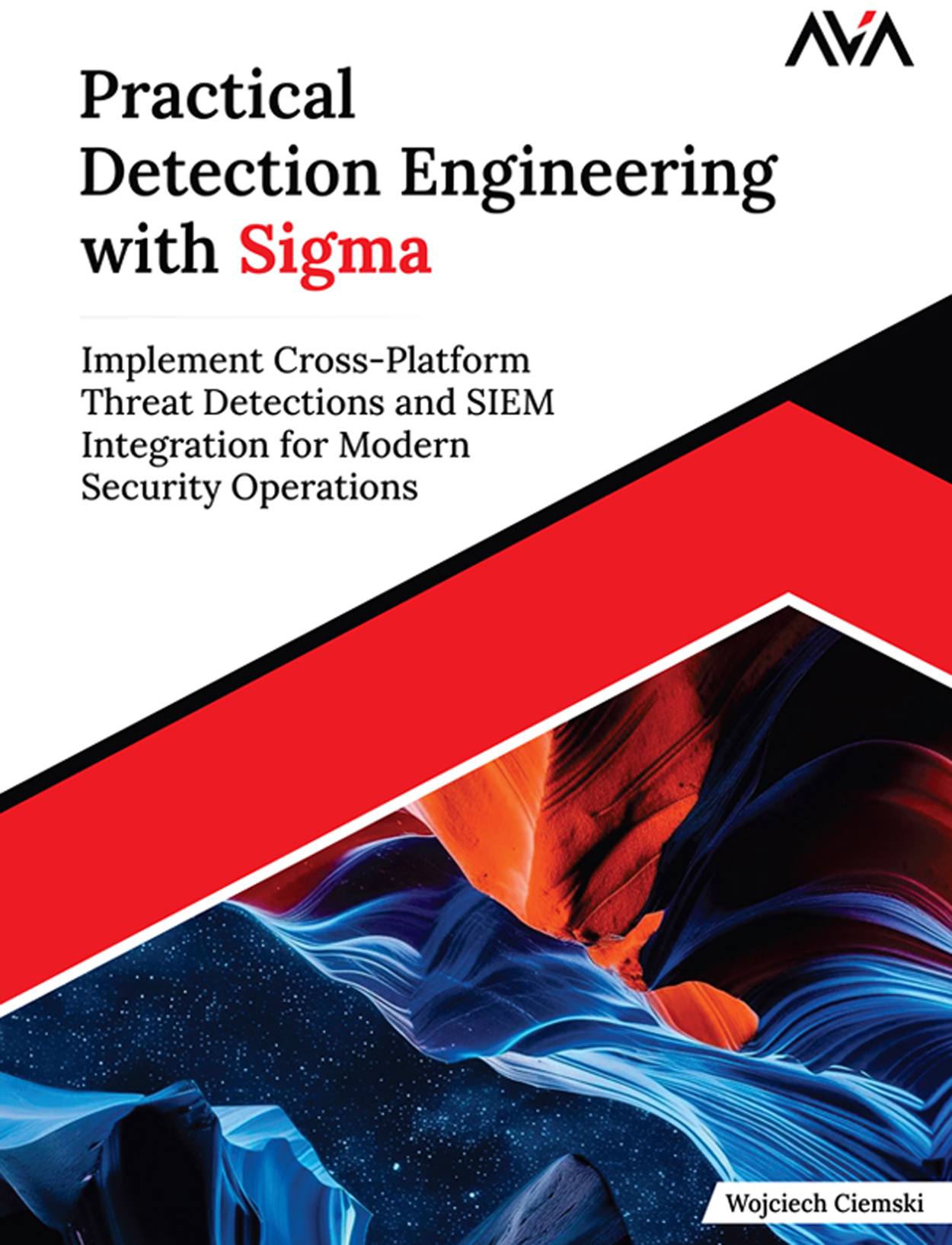
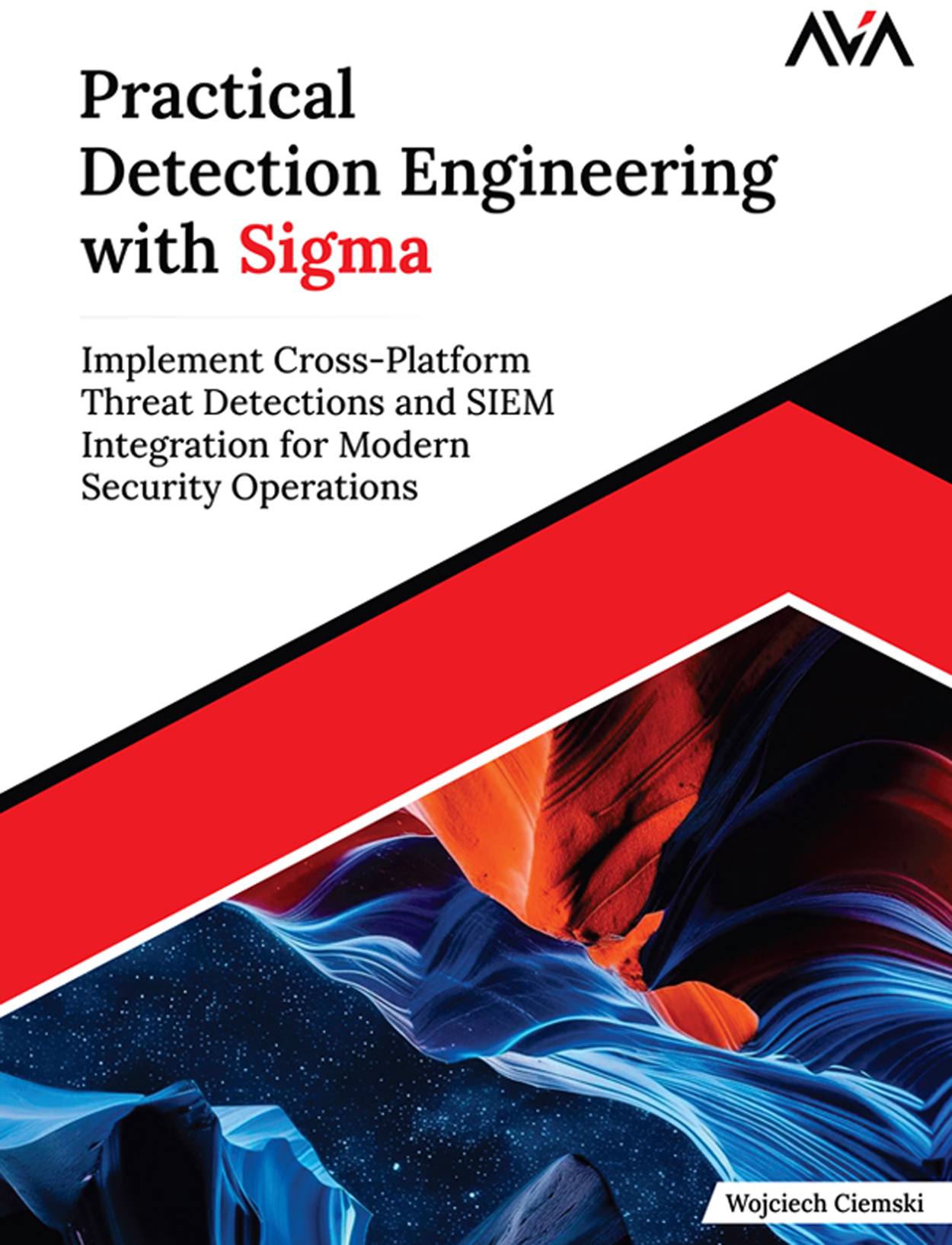
Practical Detection Engineering with Sigma

Overview

Released
July 4, 2026
ISBN
9789349887978
Format
ePub

Book Details

Practical Detection Engineering with Sigma is a hands-on guide to building, testing, and operationalizing modern detections in real SOC environments. The book walks you step by step through the full detection engineering lifecycle—from understanding Sigma fundamentals to writing structured rules and deploying them across SIEM and XDR platforms. You will learn how to translate adversary behavior into behavior-based detections, aligned with MITRE ATT&CK, create rules for Windows, Linux, and network telemetry, and convert them into backend-specific queries for platforms such as Elastic, Splunk, Microsoft Sentinel, and Wazuh. Practical examples demonstrate how to validate detections using real and simulated attack data, reduce false positives, and design alerts that analysts can confidently triage. From rule creation to CI/CD automation, version control, and large-scale rule management, this book equips you to build scalable, maintainable, and production-ready detection programs aligned with modern security operations.

Author Description

Wojciech Ciemski is a cybersecurity engineer and detection specialist with over a decade of hands-on experience. His work focuses on detection engineering, Sigma Rule Language, and research-driven analysis of adversary behavior mapped to MITRE ATT&CK. He designs and tests scalable SIEM and XDR detection pipelines, based on real-world threat data.

Read this book in our EasyReadz App for Mobile or Tablet devices

To read this book on Windows or Mac based desktops or laptops:

Recently viewed Books

Help make us better

We’re always looking for ways to improve. If you’ve got feedback or suggestions about how we can do better, we’d love to hear from you.

Note: If you’re looking to solve a problem with your URMS eReader, app, or purchase, visit our Help page, or submit a help request.

What is the purpose of your visit?
Did you accomplish your goal?
Yes No
Where can we improve?
Your comments*